Security Cameras
How Many Security Cameras Does Your Property Really Need?
A practical way to plan useful coverage without buying cameras that do not solve a real problem.
Start with the outcome, not a camera count
The right number of cameras depends on what you need to see, identify, and review. A wide overview of a parking lot and a clear image of a person entering a door are different jobs and usually need different camera positions.
Before choosing equipment, define the events the system should help you understand. That may include identifying a person at an entrance, following a vehicle through a property, reviewing activity around inventory, or confirming what happened in a shared area. These outcomes become the basis for the camera plan.
Map the critical areas
Walk the property and identify entrances, vehicle approaches, transaction areas, equipment, blind spots, and the routes people naturally take.
Prioritize locations where a useful recording can change a decision. A camera that repeats another camera's view may add cost without adding evidence. A camera placed at the right transition point can often provide more value than several wide overview cameras.
- Primary and secondary entrances
- Driveways, parking, and loading areas
- Cash handling or inventory areas
- Mechanical, network, and utility spaces
Separate overview coverage from identification
Overview cameras help explain movement across a larger area. Identification cameras are positioned to capture useful detail at a doorway, gate, counter, or other controlled path. Asking one camera to do both jobs often produces an image that looks impressive on a monitor but lacks the detail needed during an incident.
Lens choice, distance, angle, and mounting height should follow the purpose of each view. The design should also avoid unnecessary overlap while preserving continuity between critical areas.
Account for lighting and real property conditions
Daylight, reflections, vehicle headlights, shadows, weather, and exterior lighting can change the usefulness of a camera throughout the day. A position that works at noon may fail at night if the scene is backlit or the subject is too far from the lens.
Reviewing the property before installation makes it possible to select better locations, plan clean cable routes, and coordinate the cameras with the building instead of treating every wall or ceiling as interchangeable.
Plan the network, recording, and retention together
Modern IP cameras depend on the network, PoE power, recording equipment, storage, and remote-access configuration. The camera count therefore affects more than the number of devices mounted on the property.
Retention should be based on how long footage is genuinely useful to the owner or manager. Resolution, frame rate, activity, compression, and the number of cameras all influence storage. Planning these items together helps prevent short retention periods, overloaded switches, and difficult future expansion.
- PoE capacity for every connected camera
- Organized switching and recorder placement
- Storage sized for the intended retention period
- Backup power for critical network and recording equipment
Finish with commissioning and a coverage review
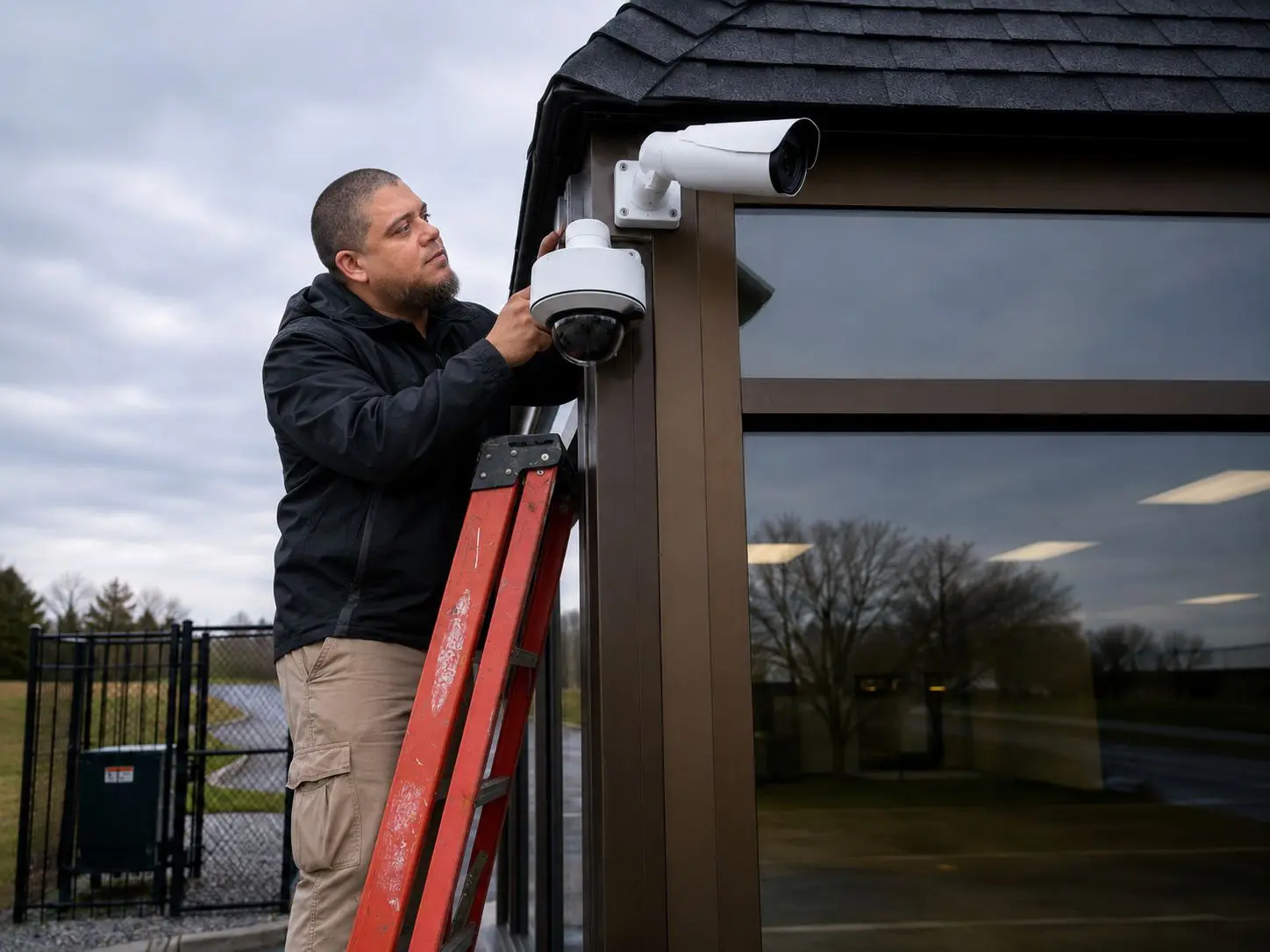
A professional installation is not complete when the camera is attached. Each view should be focused and named, recording should be verified, remote access should be tested, and the owner should understand how to find and export footage.
The final number of cameras is the result of that complete plan. It should be enough to cover the property's real risks without filling the system with devices that do not solve a defined problem.